
For those exploring what the next chapter can look like, staying active is not just about wellness. It is about continuing to move through the world with confidence, maintaining independence and enjoying a lifestyle that supports both physical and emotional well-being within a connected, intellectually engaging community.
What Are the Benefits of Exercise for Older Adults?
The benefits of exercise for older adults include improved strength, better balance, increased mobility and greater confidence in daily life. Exercise also supports emotional and social well-being by creating opportunities to connect with others, build relationships and maintain a sense of purpose.
Staying active supports the ability to handle everyday routines, whether that means walking comfortably, maintaining stability or simply having the energy to stay engaged throughout the day. Regular movement supports cognitive health and emotional well-being, helping individuals feel more connected, engaged and confident. Group fitness experiences, in particular, create natural opportunities for conversation, shared experiences and a stronger sense of community.
At Ring House, this approach to wellness is not limited to structured workouts. It is part of a broader lifestyle that encourages movement, interaction and continued growth within a connected, intellectually engaging community rooted in Jewish values.
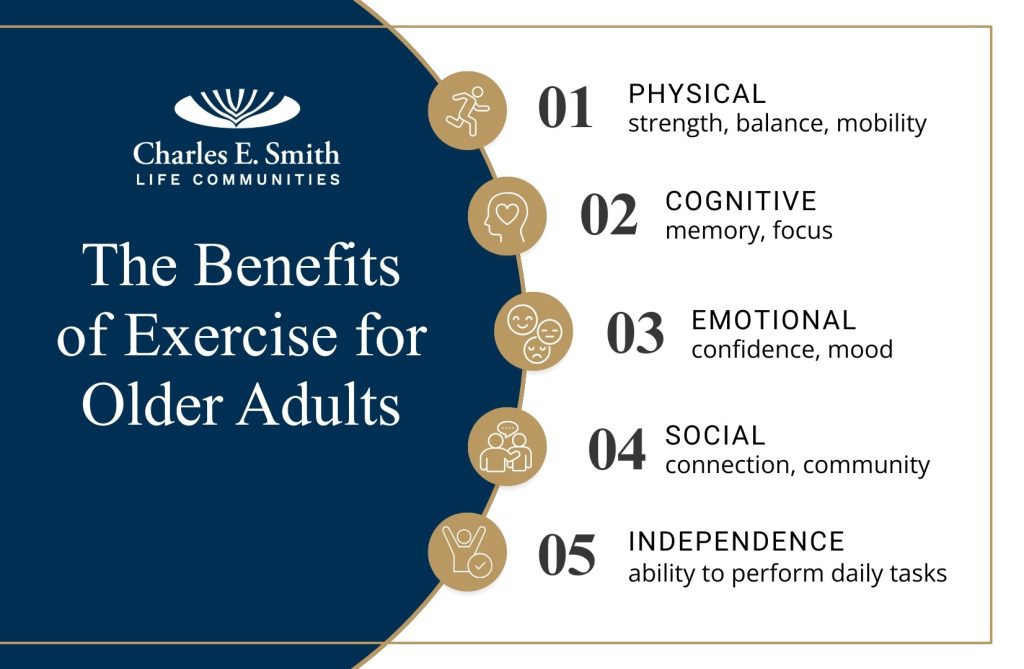
Here’s a quick look at how exercise supports overall well-being for older adults:
How Does Exercise Help Older Adults Stay Independent?
Exercise helps older adults stay independent by maintaining the strength, balance and coordination needed for everyday activities while also supporting cognitive health and emotional well-being.
When these abilities are supported through consistent movement, daily tasks like getting up from a chair, walking confidently or participating in community activities remain easier and more accessible. Regular physical activity also supports memory, focus and mood, helping individuals stay engaged, confident and connected in their daily lives.
In independent living communities, fitness programs for older adults are designed to make movement a natural part of daily life. Rather than focusing only on exercise, these programs create an environment where staying active supports both physical strength and overall well-being while reinforcing routines that contribute to long-term independence.
What Types of Fitness Programs for Older Adults Are Available at Ring House?
Fitness programs for older adults at Ring House include structured classes, access to dedicated fitness spaces and daily opportunities for movement that support strength, mobility and independence.
The variety of options makes it easier for residents to find activities that match their interests and comfort levels while building consistency over time.
Throughout the week, residents can take part in:
- Morning balance classes that improve stability, support mobility and help reduce fall risk while starting the day with purposeful movement.
- Group fitness experiences that combine physical activity with social connection and encourage consistent participation.
- Balance-focused programming that builds coordination, confidence and long-term stability.
- A fully equipped fitness center that allows residents to maintain independent routines on a flexible schedule. View a virtual tour of our fitness center here.
- In addition to these programs, residents have access to services that support long-term wellness and independence, including on-site physical, occupational and speech therapy. This combination creates a consistent and supportive approach to fitness that helps residents stay active, engaged and independent.
How Do Fitness Programs Support Different Ability Levels?
Fitness programs for older adults support different ability levels by offering structured and flexible options that build strength, mobility and confidence over time.
In independent living communities, residents have access to a range of opportunities that support both guided and independent movement. Some participate in structured group classes, while others focus on self-directed routines or take advantage of additional therapeutic support when needed.
This range of options makes it easier to stay active in a way that feels approachable and sustainable. Instead of following a one-size-fits-all program, individuals can choose activities that match their current abilities and gradually build strength and confidence over time.
As a result, fitness becomes part of a consistent routine rather than something occasional, supporting long-term independence and overall well-being.
How Do Older Adults Stay Active Throughout the Day?
In independent living communities, a typical day includes built-in opportunities for movement that fit naturally into everyday life.
Many Ring House residents begin the morning with a fitness class focused on balance or mobility, followed by afternoon activities such as group exercise, walking or outings that encourage continued movement. Throughout the day, these moments of activity are balanced with time for social connection, learning and relaxation. Evenings often include cultural programs, events or gatherings that keep residents engaged and involved.
This structure makes it easier to stay active without needing to create a separate routine. Movement becomes part of how the day unfolds, supporting consistency while allowing each individual to choose how they participate. Take a look at our daily activities to see how active living is naturally built into daily routines.
Can Exercise Help Older Adults Stay Independent Longer?
Yes. Exercise helps older adults stay independent longer by supporting strength, mobility and overall physical resilience.
For families exploring independent living, this is often one of the most important considerations. A community that prioritizes wellness helps support long-term independence by making it easier to stay active on a consistent basis.
In independent living communities, this is reflected through daily opportunities for movement, access to fitness and therapy services and a culture that encourages staying active and mentally engaged as well.
Together, these elements create an environment where independence is supported through everyday choices and consistent engagement. Learn more about how an independent living lifestyle keeps you moving.
How Does Fitness Fit Into Daily Life at Ring House?
At Ring House, staying active is supported through a combination of structured programs, accessible spaces and a community environment that encourages participation.
Residents can choose how they engage, whether that means joining a scheduled fitness class, using the fitness center independently or taking part in activities and outings that involve movement throughout the day.
This flexibility allows each individual to build a routine that fits their preferences and energy level while still maintaining consistency. Over time, these small, regular moments of activity contribute to greater strength, confidence and independence.
This approach creates a more holistic experience of wellness. Physical activity, intellectual engagement and meaningful social connection come together to support not just how residents live, but how they continue to grow and stay connected to what matters most.
A Community That Supports Strength, Wellness, and Independence
At Ring House and across campus at Charles E. Smith Life Communities, fitness programs for older adults are part of a broader commitment to helping residents live fully and independently. With a range of programs, supportive services and opportunities for connection and lifelong learning, residents stay active in ways that feel natural and sustainable.
For older adults and families, this provides reassurance and a sense of clarity about what daily life can look like, where independence, well-being and community are supported every day.
Download our brochure to learn more about Ring House and our mission and values.
Frequently Asked Questions About Exercise for Older Adults
What is the best type of exercise for older adults?
The best exercise includes a combination of strength, balance and low-impact cardio to support mobility and overall health.
How often should older adults exercise?
Regular movement throughout the week, including both structured exercise and daily activity, helps support long-term health and independence. This article is an interesting read on how many steps seniors need per day.
What are the benefits of exercise for older adults?
Exercise supports strength, balance, mobility and overall independence, while also contributing to cognitive and emotional well-being.
Can exercise help prevent falls?
Yes. Strength and balance exercises improve stability and coordination, which can help reduce fall risk. They also support muscle strength and body awareness, making everyday movements like walking, turning or getting up from a chair feel more steady and controlled.
Are older adult fitness programs available for different ability levels?
Yes. Older adult fitness programs are designed to accommodate a range of abilities, allowing individuals to participate at a comfortable and sustainable pace that feels right for them.
Want to see how staying active can support independence in everyday life? Schedule a visit to Ring House and experience our community for yourself.